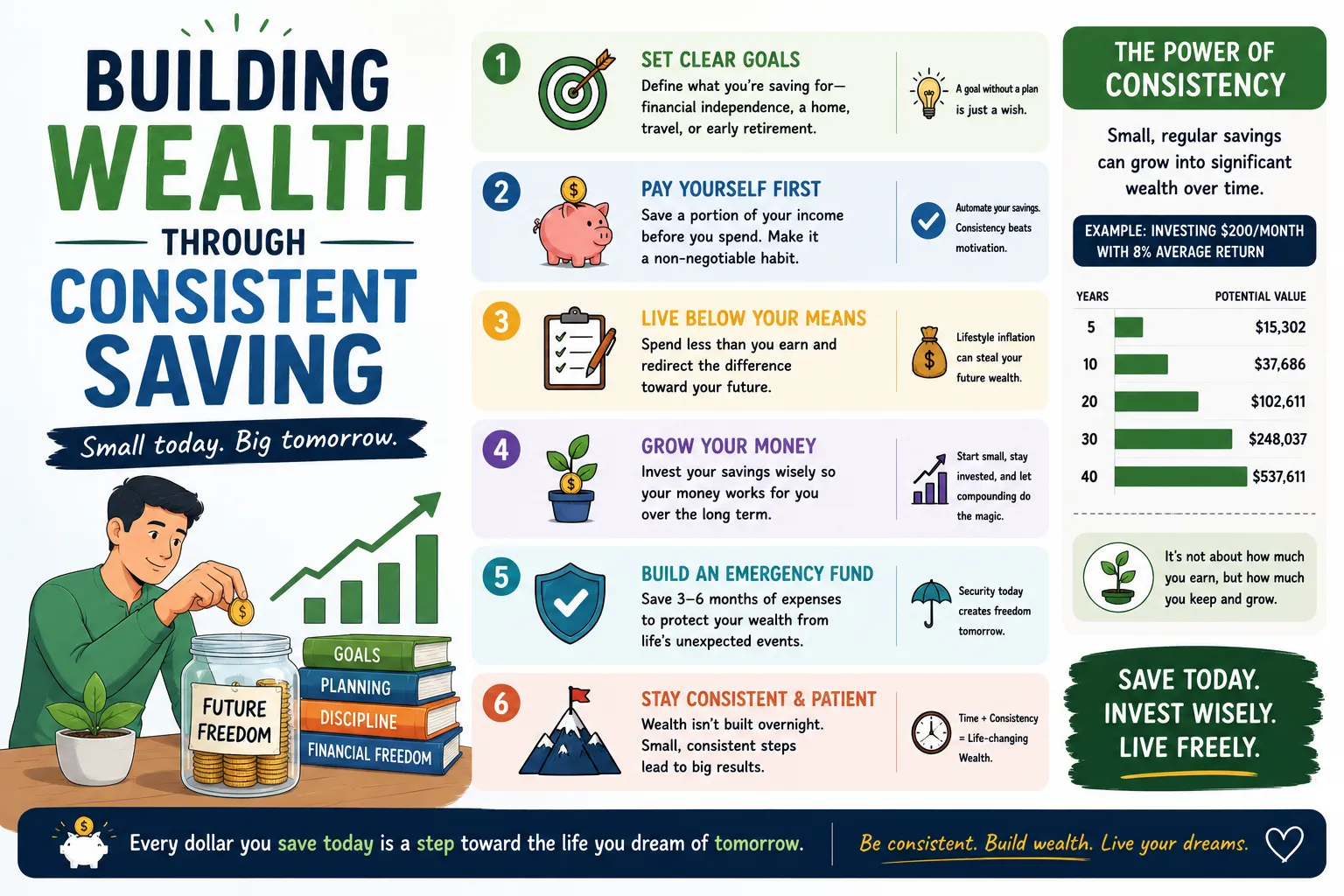
Building Wealth Through Consistent Saving
Wealth creation is often misunderstood as a process driven only by high income or aggressive investing. While both play important roles, the foundation of long-term financial success is far simpler and more powerful: consistent saving. The habit of saving regularly, regardless of income level, is one of the most reliable paths toward financial stability, investment growth, and long-term independence.
Many financially successful individuals did not become wealthy overnight. Instead, they built their financial foundation gradually through disciplined saving habits, controlled spending, and strategic allocation of income toward assets that generate long-term value. Consistent saving is not about sacrificing lifestyle; it is about creating financial control and ensuring that money works for you over time.
This comprehensive guide explores how consistent saving builds wealth, why it is so powerful, and how anyone can develop saving habits that lead to financial freedom.
Why Consistent Saving Is the Foundation of Wealth
Saving money consistently is the first step in building wealth because it creates financial structure and stability. Without savings, even high income can be unstable due to unexpected expenses, lifestyle inflation, or poor financial planning.
Consistent saving helps in:
- Creating financial security
- Building emergency funds
- Funding investments
- Reducing financial stress
- Preparing for retirement
- Achieving long-term financial goals
Wealth is not only about earning more—it is about keeping and growing what you earn.
The Power of Saving Early and Regularly
Time is one of the most powerful factors in wealth accumulation. The earlier and more consistently you save, the greater the long-term impact due to compounding growth.
| Monthly Savings | Time Period | Estimated Value (8% Growth) |
|---|---|---|
| $200 | 20 Years | $118,000+ |
| $500 | 20 Years | $294,000+ |
| $1,000 | 20 Years | $589,000+ |
| $2,000 | 20 Years | $1.17 Million+ |
Even small savings, when maintained consistently, can grow into significant wealth over time.
Building the Habit of Consistent Saving
Developing a saving habit requires discipline and structure. It is not about saving large amounts occasionally, but saving smaller amounts consistently over long periods.
Effective strategies include:
- Setting fixed monthly savings goals
- Automating transfers to savings accounts
- Separating savings from spending accounts
- Tracking financial progress regularly
- Reducing unnecessary expenses
Consistency matters more than the initial amount saved.
Pay Yourself First Strategy
One of the most effective wealth-building methods is the “pay yourself first” approach. This strategy ensures that savings are prioritized before any discretionary spending occurs.
Instead of saving what is left at the end of the month, individuals allocate a portion of income immediately after receiving it.
Benefits include:
- Guaranteed savings growth
- Improved financial discipline
- Reduced unnecessary spending
- Faster wealth accumulation
Emergency Funds and Financial Security
A critical part of consistent saving is building an emergency fund. This fund acts as a financial buffer against unexpected events such as job loss, medical expenses, or urgent repairs.
Recommended emergency savings levels:
- 3 months of expenses (minimum)
- 6 months of expenses (ideal)
- 12 months of expenses (strong financial security)
| Emergency Fund Level | Financial Security Impact |
|---|---|
| Low | Limited protection |
| Moderate | Basic stability |
| High | Strong financial independence |
Emergency savings prevent financial setbacks from disrupting long-term wealth goals.
How Savings Lead to Investment Growth
Saving alone builds financial security, but investing savings builds wealth. Consistent saving provides the capital needed to invest in income-generating assets.
Common investment options include:
- Stock market investments
- Index funds
- Exchange-traded funds (ETFs)
- Real estate investments
- Retirement accounts
- Dividend-paying assets
The more consistently you save, the more consistently you can invest, accelerating wealth creation.
Avoiding Lifestyle Inflation
One of the biggest challenges in maintaining consistent savings is lifestyle inflation. As income increases, spending often increases proportionally.
To maintain saving discipline:
- Increase savings with income growth
- Avoid unnecessary luxury upgrades
- Focus on long-term financial goals
- Maintain simple spending habits
Controlling lifestyle inflation ensures that income growth translates into wealth growth.
Automating Your Savings
Automation is one of the most powerful tools for building consistent saving habits. When savings are automated, financial discipline becomes effortless.
Automation methods include:
- Automatic bank transfers
- Payroll deductions
- Investment contributions
- Recurring savings deposits
Automation eliminates the temptation to spend money before saving it.
Saving vs Investing: Understanding the Balance
While saving is essential, it must be balanced with investing for long-term wealth creation.
| Aspect | Saving | Investing |
|---|---|---|
| Risk | Low | Moderate to High |
| Return | Low | Higher long-term potential |
| Purpose | Security | Wealth growth |
Both saving and investing are necessary for a balanced financial strategy.
Psychology of Saving Money
Behavioral finance plays a significant role in saving habits. Emotional spending, impulsive purchases, and lack of planning often prevent individuals from saving consistently.
To improve saving psychology:
- Set clear financial goals
- Visualize long-term benefits
- Track progress regularly
- Reward disciplined behavior
Building strong financial habits starts with mindset transformation.
Common Saving Mistakes
| Mistake | Financial Impact |
|---|---|
| No Saving Plan | Inconsistent wealth growth |
| Saving Only Leftover Money | Minimal savings accumulation |
| Ignoring Inflation | Reduced purchasing power |
| Premature Withdrawals | Interrupted compounding growth |
| No Emergency Fund | Financial instability |
Building Multiple Saving Streams
Advanced financial planners often create multiple saving channels to optimize financial growth.
These may include:
- Emergency savings account
- Retirement savings account
- Investment savings account
- Goal-based savings funds
Separating savings improves clarity and financial control.
Consistent Saving and Financial Independence
Financial independence is achieved when passive income exceeds expenses. Consistent saving is the first step toward building the investment capital needed to generate passive income streams.
Over time, disciplined saving enables individuals to:
- Invest in income-generating assets
- Build diversified portfolios
- Create financial safety nets
- Reduce dependency on active income
Long-Term Benefits of Consistent Saving
The benefits of consistent saving extend far beyond financial stability.
- Reduced financial stress
- Increased investment opportunities
- Faster achievement of life goals
- Greater financial freedom
- Improved retirement readiness
- Stronger financial resilience
These benefits compound over time, just like the savings themselves.
Final Thoughts
Building wealth is not a short-term event—it is a long-term process driven by discipline, consistency, and smart financial habits. Consistent saving is the cornerstone of this process, providing the foundation for investments, financial security, and eventual financial independence.
Regardless of income level, anyone can begin building wealth by committing to saving regularly, avoiding unnecessary expenses, and investing savings wisely. Over time, even small contributions can grow into significant financial assets through the power of consistency and compounding.
The key is not how much you save today, but how consistently you save over time. With discipline and patience, consistent saving can transform financial futures and create lasting wealth.